
Scaling Your Retail Business: 2024 Growth Guide for India
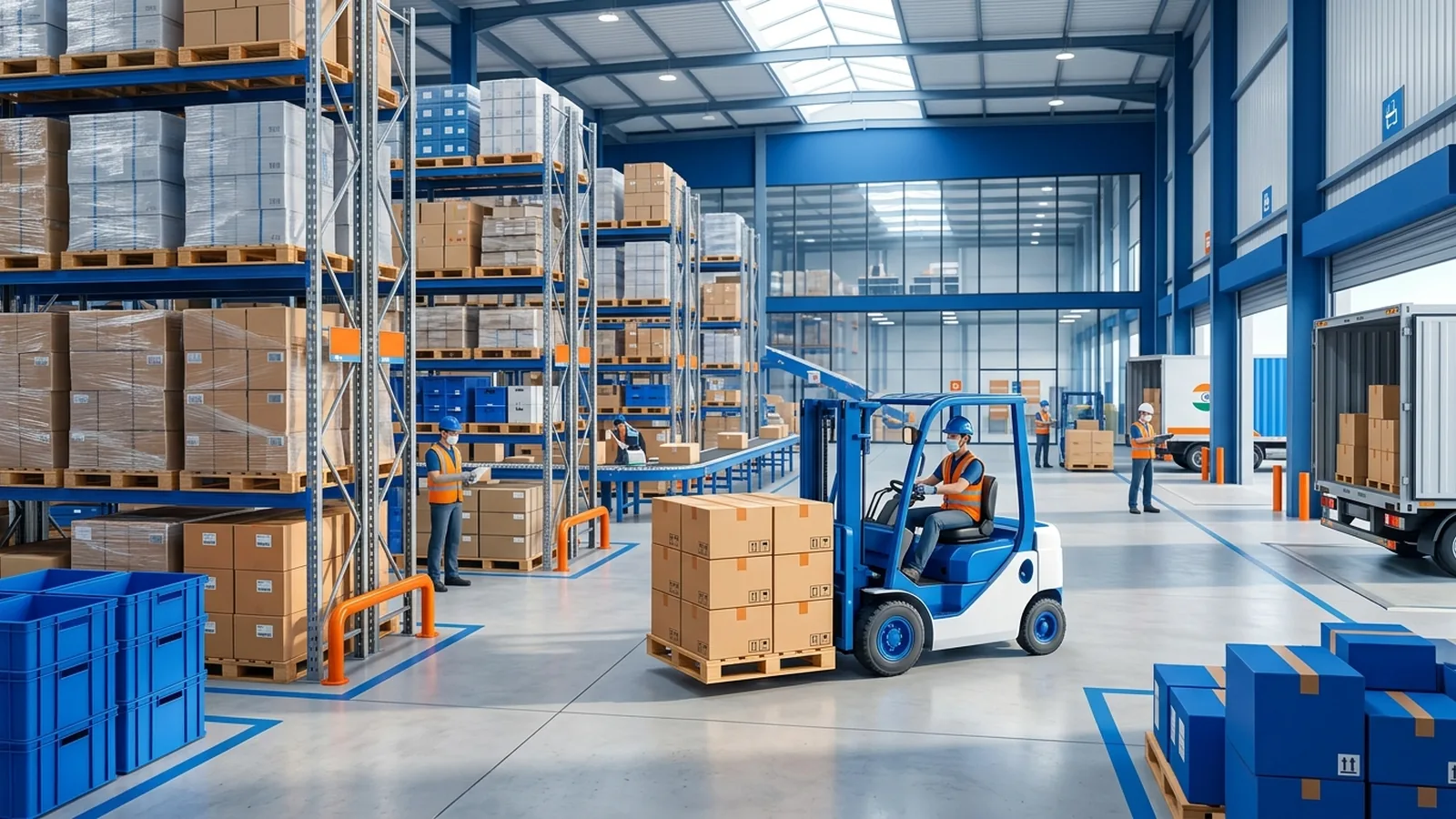
Scaling your retail business represents one of the most exciting yet challenging phases of entrepreneurship. While growing from a single store or modest online operation to a multi-location or high-volume enterprise promises increased revenue and market presence, the journey demands careful planning, strategic resource allocation, and operational excellence. For Indian retailers navigating a competitive and price-sensitive market, successful scaling isn't just about opening more stores or expanding product lines—it's about building sustainable systems that maintain quality, profitability, and customer satisfaction as you grow.
The Indian retail sector is experiencing unprecedented growth, with organized retail expected to reach $1.5 trillion by 2030. This expansion creates tremendous opportunities for small and mid-sized retailers willing to scale strategically. However, rapid growth without proper foundations often leads to cash flow problems, inventory mismanagement, diluted brand identity, and operational chaos. This comprehensive guide explores proven strategies for scaling your retail business sustainably, from optimizing your supply chain and procurement processes to leveraging technology and securing the right funding.
Whether you operate a single boutique, manage a small chain, or run an e-commerce store ready for the next level, understanding the fundamentals of retail scalability will help you expand confidently while avoiding the common pitfalls that derail many growing businesses.
Understanding Retail Scalability
Scalability in retail refers to your business's ability to grow revenue significantly without proportionally increasing costs and resources. A truly scalable retail business can double its sales without doubling its expenses, headcount, or complexity. This efficiency comes from establishing repeatable systems, leveraging technology, and creating operational models that work consistently across multiple locations or sales channels.
The difference between growth and scalable growth is crucial. Any business can grow by simply adding more resources—more stores, more staff, more inventory. However, scalable growth means increasing output and revenue while maintaining or improving profit margins. For example, a retailer who opens five new stores but needs to hire five new managers, maintain five separate inventory systems, and personally oversee each location hasn't truly scaled—they've just replicated. In contrast, a retailer who standardizes operations, centralizes inventory management, and creates training systems that work across all locations has built a scalable model.
Indian retailers face unique scalability challenges including diverse regional preferences, complex logistics networks, price-sensitive consumers, and fragmented supply chains. Successful scaling requires adapting global best practices to local realities while maintaining the agility to respond to rapid market changes.
Assessing Your Business Readiness to Scale
Before investing time and capital into expansion, conduct an honest assessment of your current business foundation. Premature scaling is one of the leading causes of retail business failure. Ask yourself these critical questions:
- Consistent profitability: Have you maintained positive cash flow and profitability for at least 12 consecutive months? Scaling a money-losing operation simply amplifies losses.
- Product-market fit: Do you have proven demand with repeat customers and strong retention rates? Are your customers actively recommending your business?
- Documented processes: Can a new employee learn your operations from written procedures, or does everything depend on tribal knowledge and founder involvement?
- Strong unit economics: Does each transaction, customer, or location generate healthy margins after accounting for all costs?
- Operational systems: Do you have reliable inventory management, accounting, and customer relationship systems in place?
- Management capacity: Can your current team handle additional complexity, or do you need to hire experienced managers first?
If you answered "no" to multiple questions, focus on strengthening these foundations before pursuing aggressive expansion. A strong core business scales much more easily than a struggling one.
Key Performance Indicators to Track
Establish baseline metrics before scaling so you can monitor whether growth is healthy or problematic. Essential KPIs include:
| Metric | What It Measures | Healthy Target |
|---|---|---|
| Gross Margin | Profitability per product sold | 40-60% for most retail categories |
| Inventory Turnover | How quickly you sell through stock | 4-6 times annually (varies by category) |
| Customer Acquisition Cost | Cost to acquire each new customer | Less than 30% of first purchase value |
| Customer Lifetime Value | Total profit from average customer | 3-5x customer acquisition cost |
| Operating Cash Flow | Cash generated from operations | Positive and growing consistently |
| Same-Store Sales Growth | Revenue growth excluding new locations | 5-10% year-over-year |
Optimizing Inventory and Procurement
Inventory management becomes exponentially more complex as you scale. The difference between success and failure often comes down to how effectively you source, stock, and move products. Poor inventory decisions tie up cash, create storage problems, and lead to markdowns that erode profitability.
As you grow, shift from opportunistic buying to strategic procurement. Develop relationships with reliable suppliers who can scale with you, negotiate volume discounts, and establish favorable payment terms. For retailers focused on value and margins, sourcing wholesale inventory through B2B marketplaces provides access to liquidation stock, surplus items, and closeout merchandise at 30-70% below wholesale prices.
Inventory Strategies for Scaling Retailers
Implement these inventory best practices to support sustainable growth:
- ABC analysis: Categorize inventory by value and velocity. "A" items (high value, fast-moving) deserve close attention and frequent reordering. "C" items (low value, slow-moving) should be minimized or eliminated.
- Demand forecasting: Use historical sales data, seasonality patterns, and market trends to predict future demand more accurately. Even basic spreadsheet analysis is better than gut feeling.
- Safety stock calculations: Maintain buffer inventory for your best-sellers to prevent stockouts, but avoid over-stocking slow movers.
- Just-in-time principles: Where possible, receive inventory closer to when you'll sell it, reducing storage costs and capital tied up in stock.
- Centralized vs. distributed inventory: As you add locations, decide whether to maintain stock at each location or fulfill from a central warehouse—each model has tradeoffs.
- Diversified sourcing: Don't depend on a single supplier for critical items. Build relationships with multiple vendors and explore bulk lot purchases to reduce per-unit costs.
Smart procurement separates profitable scaling from cash-draining expansion. Calculate your true landed costs including shipping, customs, storage, and financing. Sometimes a higher unit price from a reliable supplier beats a lower price from an unreliable one when you factor in stockouts, quality issues, and delayed deliveries.
Building Strategic Supplier Partnerships
Your suppliers become critical partners as you scale. The vendors who served you well as a small retailer may lack the capacity, technology, or flexibility needed for your next phase. Proactively cultivate relationships with suppliers who can grow alongside your business.
Look for suppliers offering favorable payment terms such as net-30 or net-60, which significantly improve your cash flow position. As your order volumes increase, negotiate for better pricing tiers, exclusive products, or preferential allocation during high-demand periods. Volume gives you leverage—use it strategically.
Evaluating Potential Suppliers
When vetting suppliers for a scaling business, assess these factors:
- Reliability and consistency: Do they deliver on time? Is product quality consistent batch-to-batch?
- Capacity: Can they handle 2x or 5x your current order volume if your business grows rapidly?
- Technology integration: Do they offer EDI, API connections, or automated ordering systems that integrate with your inventory management?
- Geographic reach: Can they ship efficiently to all your locations, or will you need regional suppliers?
- Flexibility: Will they accommodate smaller test orders for new products or locations?
- Value-added services: Do they offer dropshipping, custom packaging, or other services that simplify your operations?
B2B marketplaces like DealsGoKart provide access to verified suppliers across categories, allowing you to compare options, negotiate terms, and diversify your supply base efficiently. When you explore supplier catalogs on a centralized platform, you reduce the time spent on vendor discovery and relationship-building while gaining access to competitive wholesale pricing.
Leveraging Technology for Scalable Operations
Technology transforms retail from a labor-intensive, error-prone operation into a streamlined, data-driven business. The right tech stack enables one person to manage what previously required five, and allows you to maintain quality and consistency across multiple locations or channels.
Essential technology investments for scaling retailers include:
- Point-of-Sale (POS) system: Cloud-based POS systems like Lightspeed, Shopify POS, or Gofrugal provide real-time inventory visibility, sales reporting, and customer data across all locations.
- Inventory Management System (IMS): Dedicated IMS platforms track stock levels, automate reordering, manage suppliers, and integrate with your accounting and e-commerce systems.
- E-commerce platform: If you're not already online, platforms like Shopify, WooCommerce, or Amazon enable you to reach customers beyond your physical footprint with relatively low upfront investment.
- Customer Relationship Management (CRM): Systems like Zoho or HubSpot help you understand customer behavior, personalize marketing, and improve retention.
- Accounting and financial software: QuickBooks, Tally, or Zoho Books provide the financial visibility critical for managing cash flow during growth.
- Warehouse Management System (WMS): As inventory complexity grows, WMS platforms optimize receiving, storage, picking, and shipping processes.
Building an Integrated Tech Stack
Avoid the common mistake of implementing disconnected systems that create data silos. Your POS should sync with your inventory system, which connects to your accounting software, which integrates with your e-commerce platform. This integration eliminates manual data entry, reduces errors, and provides real-time visibility across your business.
Start with core systems and expand gradually. Many retailers successfully scale with a robust cloud POS and accounting software before adding specialized tools. Prioritize systems with open APIs and strong integration ecosystems so you're not locked into a technology dead-end.
Financial Planning and Funding Options
Scaling requires capital—for inventory, store buildouts, technology, marketing, and working capital to bridge the gap between paying suppliers and collecting from customers. Undercapitalization kills more scaling attempts than bad strategy.
Create detailed financial projections including best-case, expected, and worst-case scenarios. Model your cash flow monthly for at least 24 months, accounting for seasonal fluctuations, expansion costs, and ramp-up periods for new locations or channels. Most retailers underestimate how long new initiatives take to reach profitability.
Funding Options for Retail Expansion
Indian retailers have multiple funding avenues depending on business stage and growth trajectory:
- Bootstrapping and retained earnings: The least dilutive option is funding growth from profits. This forces discipline and sustainable growth rates, though it may be slower than venture-backed competitors.
- Bank loans and lines of credit: Traditional financing through institutions like SBI, HDFC, or ICICI offers competitive rates for established businesses with collateral and strong financials.
- MSME loans and government schemes: The Mudra Yojana, CGTMSE, and other government programs provide accessible financing for small and medium enterprises.
- Inventory financing: Specialized lenders provide working capital specifically for inventory purchases, using the inventory itself as collateral.
- Angel investors and venture capital: For high-growth potential retailers, equity investors provide capital plus strategic guidance, though you'll give up ownership and control.
- Vendor financing: Negotiate extended payment terms or consignment arrangements with suppliers to effectively finance inventory without borrowing.
Many successful retailers use a combination of funding sources, matching the capital type to specific needs. Use equity for long-term investments like technology platforms, debt for inventory and working capital, and vendor terms wherever possible.
Market Expansion Strategies
How you expand matters as much as the decision to scale. Different growth strategies carry distinct risks, capital requirements, and timelines. Choose an approach aligned with your resources, market position, and competitive advantages.
Geographic Expansion
Opening additional physical locations is the traditional retail scaling path. Success requires thorough location analysis, considering demographics, competition, foot traffic, accessibility, and rental costs. Test new markets with pop-up stores or temporary locations before committing to long-term leases.
Consider a hub-and-spoke model where you establish a strong presence in one city before expanding to nearby markets. This allows you to leverage existing brand awareness, centralize some operations, and reduce logistics complexity compared to scattered nationwide expansion.
Omnichannel Growth
Combining physical and digital channels provides resilience and broader reach. Customers increasingly expect to research online, buy in-store, or purchase online for home delivery. An omnichannel strategy meets customers where they are while maximizing each channel's strengths.
Start by adding e-commerce to existing physical stores, using your retail locations for inventory storage, customer pickups, and returns processing. This approach leverages existing assets and doesn't require separate fulfillment infrastructure initially.
Product Line Extension
Expand your product assortment to increase average transaction value and shopping frequency. If you sell apparel, add accessories or footwear. If you operate a grocery store, add prepared foods or household items. Stay within adjacent categories where you understand customer needs and can leverage existing supplier relationships.
Test new categories with limited inventory before full commitment. Use customer feedback and sales data to identify winners worth expanding and losers to exit quickly. Smart procurement strategies allow you to test new products affordably through closeout and liquidation channels.
Franchise and Partnership Models
Franchising allows rapid expansion with minimal capital investment since franchisees fund store openings. However, it requires proven systems, strong brand recognition, and the infrastructure to support franchisees. Partnership models—like shop-in-shop concepts or revenue sharing with existing retailers—offer middle ground between company-owned and franchised expansion.
Building a Scalable Team and Culture
Your people ultimately determine scaling success or failure. As you grow, you'll transition from doing everything yourself to leading managers who lead teams. This requires different skills—more coaching, less doing; more systems-thinking, less firefighting.
Document everything. Create detailed standard operating procedures (SOPs) for every critical process—opening procedures, customer service standards, inventory receiving, visual merchandising, closing checklists. These documents become your training manuals and ensure consistency across locations and shifts.
Hiring and Training for Scale
Hire slowly and deliberately. Look for people who demonstrate initiative, reliability, and cultural fit, not just experience. In retail, attitude often matters more than prior knowledge since you can teach product knowledge and systems.
Invest in structured training programs. New employees should follow the same onboarding process regardless of which manager hires them. Create training checklists, shadow programs, and proficiency benchmarks before employees work independently. Strong training reduces turnover, improves customer experience, and enables faster expansion.
Develop your managers internally when possible. Promoting from within reinforces that growth opportunities exist, improving retention and ensuring managers understand your culture and standards. Supplement internal promotions with external hires who bring new perspectives and skills your team lacks.
Maintaining Culture During Growth
Culture—the shared values, behaviors, and norms that define "how we do things here"—often deteriorates during rapid scaling. Prevent culture dilution by:
- Clearly articulating your core values and hiring/firing based on them
- Recognizing and rewarding behaviors that exemplify your culture
- Communicating transparently about challenges, changes, and company direction
- Maintaining rituals and traditions even as the team grows
- Staying accessible as a leader and maintaining regular touchpoints with frontline staff
Overcoming Common Scaling Challenges
Understanding typical scaling challenges helps you anticipate and mitigate them proactively. Most growing retailers encounter these obstacles:
Cash Flow Crunches
Growth consumes cash. You pay for new inventory, store buildouts, and hiring before new locations generate revenue. Many profitable businesses fail during expansion because they run out of cash despite strong sales.
Mitigate cash flow problems by maintaining adequate reserves (ideally 6 months of operating expenses), negotiating longer payment terms with suppliers, accelerating customer payments, and carefully staging expansion so new revenue begins before capital is exhausted. Monitor cash flow weekly during growth phases, not just monthly.
Quality and Consistency Issues
As you add locations and employees, maintaining consistent quality becomes harder. Customer experience varies by which employee serves them or which store they visit.
Address consistency through detailed SOPs, training programs, regular audits, mystery shopping, and technology that enforces standards. Implement quality checkpoints and make quality metrics part of manager performance evaluations.
Inventory Mismanagement
More locations mean more complexity in inventory allocation. You'll face situations where one store has excess stock while another stocks out, or you over-buy for expansion and tie up cash in slow-moving items.
Solve inventory challenges with better systems, data-driven forecasting, centralized allocation decisions, and more flexible sourcing. Build relationships with suppliers on platforms like DealsGoKart where you can quickly source additional inventory or move excess stock through liquidation channels.
Loss of Focus
Expanding into new markets, categories, or channels divides your attention and resources. You may neglect your core business chasing new opportunities, weakening everything.
Maintain focus by expanding sequentially rather than simultaneously, establishing success criteria before pursuing additional initiatives, and ensuring your core business remains strong throughout scaling efforts. Sometimes the best growth decision is saying "not yet" to attractive opportunities.
Competitive Response
Your success attracts competitor attention. Larger players may lower prices, improve service, or expand into your markets once they perceive you as a threat.
Build defensible competitive advantages—unique products, superior customer experience, proprietary technology, or exclusive supplier relationships—that can't be easily replicated. Focus on customer loyalty and community relationships that create switching costs beyond just price.
Scaling your retail business successfully requires balancing ambition with pragmatism, moving quickly while building strong foundations, and maintaining what made you successful while evolving for new challenges. The retailers who scale sustainably are those who view growth as a marathon, not a sprint—building systems, developing people, and strengthening operations with each expansion phase.
The opportunities in Indian retail have never been greater, but neither has the competition. By implementing the strategies outlined in this guide—from optimizing procurement and inventory management to leveraging technology and strategic funding—you'll position your business for sustainable, profitable growth. Remember that successful scaling isn't about how fast you grow, but how well you grow, maintaining quality, profitability, and customer satisfaction throughout the journey.
Ready to take your retail business to the next level? DealsGoKart connects growing retailers with verified suppliers offering wholesale, liquidation, and surplus inventory across hundreds of categories. Whether you're opening new locations, expanding your product range, or optimizing margins, our B2B marketplace provides the sourcing solutions you need to scale profitably. Learn more about how DealsGoKart supports Indian retailers, or start exploring thousands of inventory lots today to find the products that will fuel your next growth phase.
Frequently asked questions
The right time to scale is when you have consistent profitability, proven product-market fit, streamlined operations, and sufficient cash reserves. Ideally, you should see steady demand that outpaces your current capacity, with positive cash flow for at least 6-12 consecutive months.
Ready to source smarter?
Ready to scale your retail business with cost-effective wholesale and liquidation inventory? Explore thousands of verified lots on DealsGoKart and connect with trusted suppliers across India today.