Reverse Logistics Explained: Complete Guide for India 2025
Every product that moves through your supply chain doesn't always travel in one direction. While traditional logistics focuses on getting products from manufacturers to customers, there's an equally important—and often overlooked—flow moving in the opposite direction. This backward movement of goods through the supply chain is called reverse logistics, and it's becoming increasingly critical for businesses across India.
Whether you're dealing with customer returns from your e-commerce store, managing surplus inventory that didn't sell as expected, handling product recalls, or processing damaged goods, reverse logistics touches nearly every aspect of modern retail and distribution. For Indian businesses navigating tight margins and growing customer expectations, understanding and optimizing reverse logistics isn't just about managing returns—it's about transforming potential losses into profitable opportunities.
In this comprehensive guide, we'll explore everything you need to know about reverse logistics in the Indian context, from basic concepts to practical implementation strategies that can help your business reduce costs, improve customer satisfaction, and unlock hidden value in your supply chain.
What Is Reverse Logistics?
Reverse logistics refers to the process of moving goods from their final destination back through the supply chain to the seller, manufacturer, or designated processing facility. Unlike forward logistics that delivers products to customers, reverse logistics handles the return journey—encompassing everything from product returns and repairs to refurbishment, recycling, and disposal.
The scope of reverse logistics extends far beyond simple customer returns. It includes:
- Product returns: Items sent back by customers due to defects, damage, dissatisfaction, or change of mind
- Warranty and repair services: Products requiring maintenance or replacement under warranty terms
- End-of-life product management: Disposal, recycling, or proper handling of products that have reached the end of their usable life
- Surplus and overstock inventory: Excess products that need redistribution through secondary channels
- Product recalls: Systematic retrieval of defective or potentially harmful products from the market
- Packaging and container returns: Reusable packaging materials flowing back for reuse
- Remanufacturing and refurbishment: Processing returned goods for resale in secondary markets
For businesses operating in India's dynamic marketplace, reverse logistics has become essential infrastructure. With e-commerce penetration growing rapidly and customer expectations evolving, the volume of returns continues to increase. Industry estimates suggest that return rates in Indian e-commerce range from 15% to 30%, depending on the product category, making efficient reverse logistics a competitive necessity rather than an operational afterthought.
How Reverse Logistics Works
The reverse logistics process involves several distinct stages, each requiring careful coordination and management. Understanding this flow helps businesses identify optimization opportunities and cost-saving measures.
The Reverse Logistics Workflow
A typical reverse logistics cycle follows these steps:
- Initiation: The process begins when a customer requests a return, a product reaches end-of-life, or surplus inventory needs disposition. Clear return policies and easy initiation processes are crucial for customer satisfaction.
- Authorization: The return request is reviewed and approved based on company policies, warranty terms, or contractual obligations. This gate-keeping step prevents unauthorized returns and fraud.
- Collection and transportation: Products are picked up from the customer location or dropped off at designated return centers. Transportation costs in this stage often exceed forward logistics due to smaller, irregular shipment volumes.
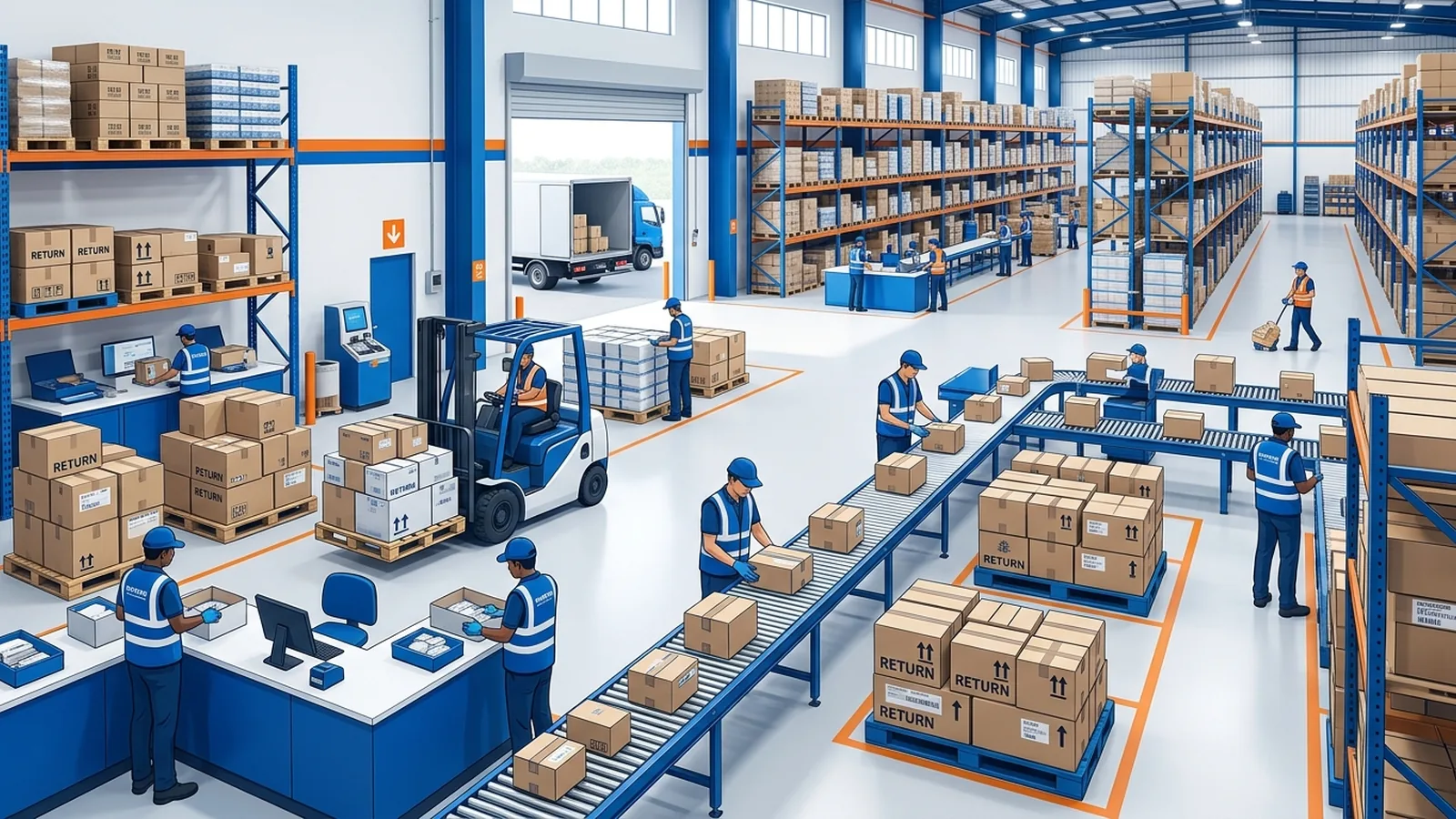
- Receiving and inspection: Returned products arrive at processing facilities where they're logged, inspected, and categorized based on condition and potential disposition paths.
- Sorting and categorization: Products are sorted into categories such as resaleable, refurbishable, recyclable, or waste, determining their next destination in the reverse supply chain.
- Disposition: Based on the sorting outcome, products move to appropriate channels—back to inventory, refurbishment centers, wholesale liquidation marketplaces, recycling facilities, or disposal.
- Data capture and analysis: Throughout the process, data is collected on return reasons, product conditions, and processing costs to inform future improvements.
Decision Points in Reverse Logistics
At each stage, businesses must make critical decisions that impact profitability. Should a returned smartphone be refurbished and resold, or is liquidation more cost-effective? Can damaged packaging be repaired, or should the product be sold as-is through secondary channels? These decisions require balancing recovery costs against potential value extraction.
| Product Condition | Typical Disposition | Value Recovery Rate | Processing Complexity |
|---|---|---|---|
| Like New / Unopened | Return to primary inventory | 80-95% | Low |
| Opened / Minor Defects | Refurbish or sell as open-box | 50-75% | Medium |
| Functional but Damaged | Liquidation or wholesale channels | 30-50% | Low-Medium |
| Repairable | Repair and refurbish | 40-60% | High |
| Beyond Repair | Parts harvesting or recycling | 10-25% | Medium-High |
| Obsolete / Non-functional | Recycling or disposal | 0-10% | Low |
Types of Reverse Logistics
Reverse logistics encompasses several distinct categories, each with unique operational requirements and business implications.
Returns Management
The most common form of reverse logistics, returns management handles products that customers send back for various reasons. In India's growing e-commerce landscape, generous return policies have become competitive differentiators, but they also create significant operational challenges. Electronics and fashion categories typically see the highest return rates, sometimes exceeding 40% during sale periods.
Effective returns management requires clear policies, streamlined processing, and quick decision-making about product disposition. Many successful retailers have established dedicated returns processing centers that can inspect, categorize, and redirect products within 24-48 hours of receipt.
Remanufacturing and Refurbishment
This category involves taking returned, used, or defective products and restoring them to saleable condition. Remanufacturing typically means disassembling products, replacing worn components, and rebuilding them to original specifications. Refurbishment is often less intensive, involving cleaning, minor repairs, and repackaging.
The refurbishment market in India has grown substantially, particularly for electronics, mobile phones, and home appliances. Consumers increasingly accept refurbished products as cost-effective alternatives, creating viable secondary markets for returned goods.
End-of-Life Product Management
When products reach the end of their usable life, businesses must manage their disposal responsibly. This includes e-waste recycling for electronics, proper disposal of hazardous materials, and compliance with environmental regulations. India's E-Waste Management Rules require manufacturers and sellers to establish collection mechanisms and ensure environmentally sound recycling.
Surplus and Overstock Liquidation
Perhaps the most opportunity-rich category for Indian businesses, surplus liquidation involves moving excess inventory through alternative channels. Seasonal overstock, discontinued product lines, or inventory from closed stores can be sold through wholesale lots on B2B marketplaces, recovering significant value that would otherwise be lost to deep discounting or storage costs.
Rental and Leasing Returns
For businesses in rental or leasing models—furniture, electronics, or equipment—reverse logistics is built into the business model. Products cycle back regularly for inspection, maintenance, and redeployment, requiring robust systems for tracking, servicing, and quality control.
Key Challenges in Reverse Logistics
Despite its importance, reverse logistics presents significant operational and financial challenges that businesses must address strategically.
Higher Complexity and Costs
Reverse logistics is inherently more complex than forward logistics. Products return in unpredictable volumes, varying conditions, and often require individual assessment rather than standardized handling. Transportation costs per unit typically run 1.5 to 2 times higher than forward logistics because returns come in smaller, irregular shipments rather than bulk deliveries.
Processing costs add another layer of expense. Each returned item must be inspected, tested, documented, and routed to the appropriate disposition channel. Labor-intensive inspection and sorting processes make economies of scale harder to achieve.
Lack of Visibility and Tracking
Many businesses lack adequate systems for tracking products through the reverse supply chain. While forward logistics enjoys sophisticated tracking technology, reverse flows often suffer from poor visibility, making it difficult to locate specific returns, predict processing times, or analyze root causes of returns.
This visibility gap leads to inefficiencies, lost inventory, and missed opportunities for process improvement. Without data on return reasons, businesses can't address underlying quality issues or improve product descriptions to reduce avoidable returns.
Infrastructure Limitations
India's logistics infrastructure, while improving, still presents challenges for reverse logistics. Last-mile connectivity issues affect return pickups, especially in tier-2 and tier-3 cities. Dedicated reverse logistics facilities are less common than forward distribution centers, and many businesses try to handle returns through the same facilities designed for outbound shipments, creating operational conflicts.
Fraud and Abuse
Return fraud—including returning used items, swapping products, or exploiting liberal return policies—costs Indian retailers significant sums annually. Balancing customer-friendly return policies with fraud prevention requires sophisticated verification processes and clear policy communication.
Value Recovery Optimization
Determining the optimal disposition for each returned product requires quick, accurate decision-making. Should a product be refurbished in-house, sold through liquidation channels, or recycled? Factors like remaining market demand, refurbishment costs, storage expenses, and available secondary market channels all influence this calculation. Many businesses default to conservative approaches, losing potential value in the process.
Regulatory Compliance
Environmental regulations around product disposal, e-waste management, and extended producer responsibility create compliance obligations that businesses must navigate. Failing to handle end-of-life products properly can result in penalties and reputational damage.
Reverse Logistics in the Indian Market
India's reverse logistics landscape has unique characteristics shaped by market dynamics, consumer behavior, and infrastructure realities.
E-Commerce Growth and Return Rates
India's e-commerce sector has been a major driver of reverse logistics evolution. Cash-on-delivery remains popular, and with it comes higher return rates—sometimes customers refuse delivery after examining products. Fashion and electronics categories see particularly high returns, with some estimates suggesting fashion returns can reach 30-40% during sale periods.
Major e-commerce players have invested heavily in reverse logistics infrastructure, establishing dedicated return centers and partnering with logistics providers for pickup services. These investments have raised customer expectations across the market, pressuring smaller retailers to offer comparable return experiences.
Growth of Secondary Markets
Indian consumers increasingly embrace secondary markets for refurbished and liquidated goods. Platforms specializing in refurbished electronics, open-box items, and surplus inventory have grown substantially. This creates opportunities for businesses to recover value from returns through channels beyond traditional disposal or steep discounting.
B2B marketplaces like DealsGoKart's wholesale platform have emerged as efficient channels for moving surplus and returned inventory at scale, connecting sellers with resellers, distributors, and retailers seeking wholesale deals.
Sustainability Awareness
Growing environmental consciousness among Indian consumers and regulators has increased focus on sustainable reverse logistics practices. Extended Producer Responsibility regulations require electronics manufacturers to manage e-waste collection and recycling. This regulatory push, combined with consumer preference for sustainable brands, makes responsible reverse logistics a competitive advantage.
Regional Variations
Reverse logistics efficiency varies significantly across Indian regions. Metro cities enjoy better infrastructure, more processing facilities, and quicker return cycles. In contrast, tier-2 and tier-3 cities face challenges with pickup logistics, longer processing times, and limited local options for product disposition. Businesses serving pan-India markets must design flexible reverse logistics strategies that accommodate these regional differences.
Business Benefits and Opportunities
While reverse logistics presents challenges, it also offers substantial benefits and revenue opportunities for businesses that manage it effectively.
Cost Reduction and Value Recovery
Efficient reverse logistics directly impacts the bottom line by maximizing value recovery from returned products. Rather than writing off returns as total losses, businesses can capture 30-70% of original value through refurbishment, liquidation, or parts harvesting. For businesses handling significant return volumes, these recovered values quickly add up to substantial savings.
Strategic partnerships with liquidation channels, including specialized procurement platforms, enable quick conversion of slow-moving inventory into working capital, freeing up resources for core business operations.
Enhanced Customer Satisfaction
Smooth, hassle-free returns processes significantly improve customer satisfaction and loyalty. Customers who experience easy returns are more likely to purchase again and recommend the business to others. In competitive markets, return policy generosity and execution quality can differentiate brands and drive customer acquisition.
Inventory Insights and Product Improvement
Return data provides invaluable insights into product quality, customer preferences, and marketplace trends. Analyzing return reasons helps identify quality issues, misleading product descriptions, sizing inconsistencies, or features that don't meet customer expectations. These insights feed directly into product development, supplier selection, and marketing strategies.
Sustainability and Brand Reputation
Responsible reverse logistics demonstrates environmental stewardship and social responsibility. Refurbishing products extends their lifecycle, reducing waste. Proper recycling prevents environmental damage. These practices resonate with environmentally conscious consumers and strengthen brand reputation, particularly among younger demographics who prioritize sustainability.
New Revenue Streams
Reverse logistics opens opportunities for new business models and revenue streams. Some businesses have built entire operations around refurbished products, targeting price-conscious segments. Others monetize reverse logistics expertise by offering services to brands that lack internal capabilities. The key is viewing reverse logistics not as a cost center but as a value creation opportunity.
Best Practices for Implementation
Successfully implementing reverse logistics requires strategic planning and operational excellence across multiple dimensions.
Establish Clear Return Policies
Your return policy sets expectations and guides customer behavior. Make policies clear, accessible, and balanced between customer-friendliness and fraud prevention. Specify eligible products, timeframes, condition requirements, and refund methods. Communicate policies prominently at purchase points and through customer service channels.
Consider tiered policies that vary by product category—electronics might have different terms than consumables. For B2B transactions, policies may differ from B2C sales, reflecting different business realities and customer relationships.
Streamline the Returns Process
Friction in the returns process frustrates customers and increases operational costs. Implement these elements for smoother operations:
- Self-service return initiation: Let customers start returns online without calling customer service
- Multiple return channels: Offer pickup services, drop-off locations, and courier returns to accommodate customer preferences
- Quick authorization: Automate approval for returns that meet policy criteria, reducing processing time
- Real-time tracking: Provide visibility into return status from pickup through refund
- Fast refunds: Process refunds promptly once returns are received and verified
Invest in Technology and Systems
Technology is essential for managing reverse logistics at scale. Key systems include:
- Returns Management System (RMS): Dedicated software for tracking returns from initiation through disposition
- Warehouse Management System (WMS): Integrated tools for receiving, inspecting, and routing returned products
- Inventory Management: Real-time tracking of products through reverse supply chain stages
- Analytics and Reporting: Data analysis tools for identifying patterns, calculating costs, and measuring performance
- Integration platforms: Connecting reverse logistics systems with e-commerce, accounting, and CRM platforms
Build Strategic Partnerships
Few businesses can efficiently handle all aspects of reverse logistics in-house. Strategic partnerships extend capabilities:
- Third-party logistics (3PL) providers: Specialized companies handling returns transportation and processing
- Refurbishment partners: Service providers with expertise in product restoration and quality control
- Liquidation channels: B2B marketplaces and wholesale buyers for surplus inventory disposition
- Recycling facilities: Certified partners for environmentally responsible end-of-life product handling
Platforms like DealsGoKart connect businesses with buyers for wholesale liquidation lots, simplifying the process of moving surplus inventory quickly and profitably.
Create a Dedicated Reverse Logistics Team
Reverse logistics requires specialized knowledge and dedicated resources. Consider establishing a team focused exclusively on returns management, with clear accountability for costs, value recovery, and customer satisfaction metrics. This team should include operations staff for processing, analysts for data insights, and customer service representatives trained specifically in returns handling.
Implement Quality Control Checkpoints
Rigorous inspection and grading processes ensure accurate disposition decisions and prevent fraud. Establish standardized criteria for categorizing product conditions, train staff consistently, and document findings thoroughly. Quality control checkpoints should balance thoroughness with speed to prevent bottlenecks.
Monitor and Optimize Continuously
Track key performance indicators (KPIs) to measure reverse logistics effectiveness:
- Return rate by product category and time period
- Average processing time from receipt to disposition
- Value recovery rate by disposition channel
- Cost per return processed
- Customer satisfaction with returns experience
- Return reasons and trends over time
Regular analysis of these metrics reveals optimization opportunities and helps justify investments in process improvements or technology upgrades.
Technology and Tools
Modern reverse logistics relies heavily on technology to manage complexity, reduce costs, and improve decision-making.
Returns Management Platforms
Specialized RMS platforms provide end-to-end returns orchestration, from customer-initiated requests through final disposition. These systems automate authorization workflows, generate return shipping labels, track products through the reverse supply chain, and integrate with inventory and accounting systems. Cloud-based RMS solutions have made sophisticated returns management accessible to businesses of all sizes.
Artificial Intelligence and Machine Learning
AI applications in reverse logistics include predictive analytics for forecasting return volumes, automated quality inspection using computer vision, dynamic pricing for liquidation inventory, and intelligent routing of returns to optimal disposition channels. Machine learning algorithms can analyze return reasons to identify product issues or recommend inventory adjustments.
Barcode and RFID Tracking
Automated identification technologies enable real-time visibility throughout the reverse supply chain. Barcoding provides cost-effective tracking, while RFID offers hands-free scanning and bulk reading capabilities. These technologies reduce manual data entry errors and speed up receiving and sorting processes.
Mobile Applications
Mobile apps empower warehouse staff with tools for inspection, photographing products, recording condition notes, and updating status in real-time. Customer-facing mobile apps simplify return initiation and provide tracking visibility, enhancing the overall experience.
Data Analytics Platforms
Business intelligence tools transform reverse logistics data into actionable insights. Analytics platforms can identify high-return products, calculate true return costs by category, benchmark performance against industry standards, and model the financial impact of policy changes. These insights drive strategic decisions about product selection, supplier relationships, and operational investments.
Integration and Automation
APIs and integration platforms connect reverse logistics systems with e-commerce platforms, marketplaces, accounting software, and customer service tools. This integration eliminates manual data transfer, ensures consistency across systems, and enables automated workflows that reduce processing time and errors.
Turning Returns Into Revenue
Reverse logistics has evolved from an operational necessity to a strategic capability that can significantly impact business performance. For Indian retailers, resellers, and distributors navigating competitive markets and rising customer expectations, mastering reverse logistics is no longer optional—it's essential for sustainable growth.
The businesses that thrive will be those that view reverse logistics not as a cost to be minimized but as an opportunity to be optimized. By implementing efficient processes, leveraging technology, building strategic partnerships, and continuously analyzing performance, you can transform returns from profit drains into revenue generators.
Whether you're processing customer returns, managing surplus inventory, or handling end-of-life products, the principles remain the same: move quickly, decide intelligently, and extract maximum value at every stage. The Indian market's growing sophistication in secondary markets and liquidation channels provides more options than ever for monetizing returned and surplus inventory.
Success in reverse logistics requires the right infrastructure, processes, and partners. B2B marketplaces have emerged as crucial components of efficient reverse logistics, providing liquid markets for surplus and returned inventory that help businesses quickly convert slow-moving stock into working capital.
Ready to optimize your reverse logistics and unlock hidden value in your inventory? Whether you're looking to liquidate surplus stock, source wholesale deals on returned products, or connect with buyers and sellers in India's B2B marketplace, DealsGoKart provides the platform and expertise to turn your reverse logistics challenges into profitable opportunities. Explore thousands of wholesale lots, connect with verified buyers and sellers, and discover how efficient liquidation channels can transform your supply chain economics. Visit our catalog today to start converting your surplus inventory into revenue.
Frequently asked questions
Traditional logistics moves products from manufacturers to end customers, focusing on forward distribution. Reverse logistics moves products backward—from customers back through the supply chain for returns, repairs, refurbishment, or disposal. While forward logistics emphasizes speed and delivery, reverse logistics prioritizes recovery, cost minimization, and value extraction from returned goods.
Ready to source smarter?
Ready to convert your surplus, returned, or overstock inventory into revenue? Explore liquidation opportunities on DealsGoKart today.